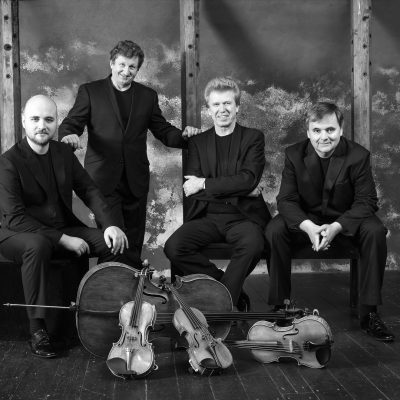
Colin Clarke, Music Web International
…
“The tonal richness of the Wihan Quartet is immediately apparent from the very opening of the first quartet.”
So is their penchant for eloquent musical discussion, as themes are thrown out and answered by the various instruments. Dynamism balances the eloquence, though, especially in the development section of the first movement, where one experiences more than usually the spareness of Beethoven’s textures. The Adagio affetuoso ed appassionato, which follows, is, in the Wihan’s hands, a magnificent utterance that seeks to transcend the limitations of Beethoven’s so-called ‘First Period’. The pianissimo passage around 5:30 is truly shot through with hushed expectancy…
The Scherzo displays tight ensemble and vigour. The Wihan’s violinists’ tone is most approachable. The finale includes a fugal section that is expertly delineated. Overall, the last movement is full of life.
“…The Wihan Quartet injects taste into Beethoven’s wit, finding every opportunity for inserting suave turns of phrase in amongst the general playfulness. This is youthful music, so it is entirely apposite that a talented youthful quartet can bring out its best.”
The Third Quartet, in D major, holds a first movement that represents virtuoso composition at its finest… Their first movement is exuberant in the extreme, revelling in the unending invention, the conversations between the instruments and the sheer joie de vivre. The second movement, an Andante con moto, includes much suave dialogue as well as moments of what can best be described as witty beauty… the Wihan Quartet makes its own mark on this work. By far the Wihan’s best movement, though, is the playful finale, where instruments chase each other like kittens…
…
The final, B flat, quartet is a major utterance, and the Wihans dig in in no uncertain terms, seemingly to imply a rustic element to contrast with the more overtly civilised sections.
“The Adagio ma non troppo includes some of the finest playing on the set – it just sounds like one of those performances when everything came together, and certainly bodes well for forthcoming instalments of the cycle.”
…